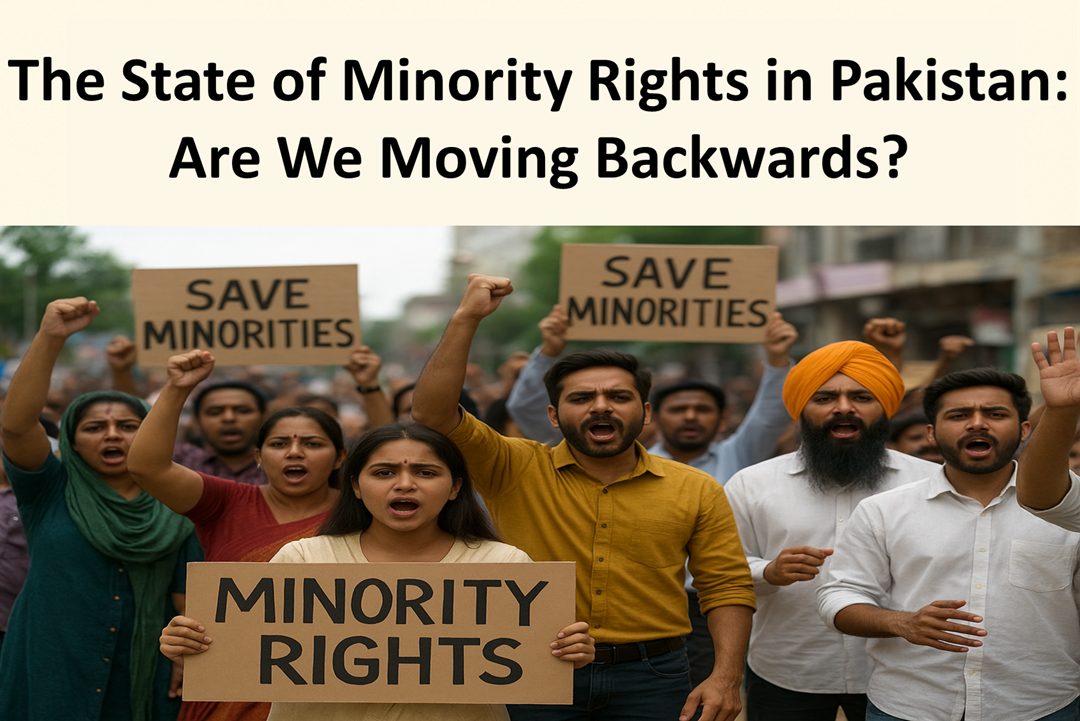
Pakistan was founded on the promise of equality, tolerance and religious freedom. Yet, decades after independence, the country’s minorities — Christians, Hindus, Sikhs, Ahmadis and others — continue to struggle for recognition and justice (HRCP). From discriminatory laws to social exclusion and violence, the question being raised once again is: Is Pakistan moving backwards on minority rights?
Recent reports from rights groups, journalists and policy experts paint a grim picture. Despite constitutional guarantees, the lived reality for minorities often contradicts the ideals of equality enshrined in Pakistan’s founding vision (DAWN).
Minority Rights in Pakistan: A Constitutional Promise Betrayed
Pakistan’s Constitution explicitly guarantees equality before the law and freedom of religion. Articles 20, 25 and 36 safeguard the rights of religious minorities and mandate the state to protect their interests. Yet, implementation has been painfully slow, and in some cases, regressive (HRCP).
The state’s failure to uphold these guarantees has allowed discrimination to seep into both law and social life (Human Rights Watch). Minority rights in Pakistan are now at a crossroads — between constitutional promise and political indifference.
How Blasphemy Laws Affect Minorities in Pakistan 2025
In 2025, the debate over Pakistan’s blasphemy laws remains as volatile as ever. While intended to protect religious sentiments, these laws have often been weaponized against minorities. False accusations, mob justice and extrajudicial killings continue to plague the system.
Cases involving Christians and Ahmadis have surged and trials rarely deliver justice. Legal experts argue that reform is necessary — not to undermine faith but to ensure fairness and prevent abuse (Amnesty International). The international community, too, has voiced concern over how blasphemy laws affect minorities in Pakistan 2025, highlighting their chilling effect on freedom of expression and belief (Jurist).
Forced Conversions: Case Studies of Pakistan’s Religious Minorities
The issue of forced conversions of religious minorities continues to surface across Sindh and Punjab. Underage Hindu and Christian girls are often coerced into converting and marrying their abductors (ECSPE). Many of these cases go unreported, and even when reported, prosecutions are rare (CSW).
In districts like Mirpurkhas and Umerkot, human rights groups document a consistent pattern — intimidation, false documents showing girls as adults and judicial apathy (DAWN). Activists warn that without strong legislation and accountability, these patterns will continue.
Discrimination in Education for Minority Children in Pakistan
The classroom, ideally a place of learning and inclusion, has become another site of exclusion. Studies reveal discrimination in education for minority children in Pakistan, from biased textbooks to social segregation (DAWN).
Minority students often face ridicule or are excluded from religious activities (DAWN). Curriculum content still glorifies one religion while marginalizing others (HRWF). Experts argue that true reform must begin in schools — through unbiased education and awareness campaigns that promote coexistence (Daily Times).
Economic Opportunities and Exclusion of Minorities in Pakistan
Economic participation among minorities remains limited. Most religious minorities are concentrated in low-paying or stigmatized occupations — sanitation work, domestic labor and manual jobs (DAWN). This economic exclusion of minorities in Pakistan is systemic, resulting from limited access to education, bias in hiring and a lack of representation in both public and private sectors (DAWN).
Despite affirmative policies, progress remains slow. Without targeted development programs and job quotas that genuinely empower minority communities, economic inequality will persist.
Political Representation of Religious Minorities in Pakistan
While reserved seats exist, the political representation of religious minorities in Pakistan has done little to empower communities on the ground (UCA). Minority lawmakers often represent mainstream political parties rather than their own communities, reducing their influence over legislation that directly affects minorities.
Analysts argue that Pakistan needs a new model of minority representation — one that gives communities real political agency rather than token inclusion (The Friday Times).
Conclusion: Is Pakistan Moving Backwards on Minority Rights?
Pakistan stands at a defining moment. While the Constitution still promises equality, social realities tell a different story. From blasphemy laws to forced conversions, educational discrimination and economic exclusion, the challenges are structural and systemic.
The central question — Is Pakistan moving backwards on minority rights? — demands an honest national conversation. If Pakistan is to honor its founding vision and global human rights commitments, it must ensure that minority rights in Pakistan are not just words in the Constitution but realities in everyday life.
FAQs
Q1. What are the main challenges facing minority rights in Pakistan today?
A. The major challenges include discriminatory laws, social prejudice and a lack of political will to enforce constitutional protections. Issues such as forced conversions, blasphemy law misuse and economic exclusion of minorities in Pakistan continue to marginalize vulnerable communities. Despite legal safeguards, minorities often face barriers to justice and equal citizenship.
Q2. How do blasphemy laws affect minorities in Pakistan in 2025?
A. In 2025, blasphemy laws continue to affect minorities in Pakistan through false accusations, mob violence and judicial delays. State and societal actors disproportionately target religious minorities, and lawmakers continue to stall legal reforms. Rights groups argue that revising these laws is essential to prevent their misuse while preserving Pakistan’s religious harmony.
Q3.What steps is the government taking to improve the political representation of religious minorities in Pakistan?
A. While there are reserved seats in parliament and provincial assemblies, many believe this system does not offer true representation. Experts suggest reforms that would allow direct elections for minority seats and stronger participation in mainstream politics to strengthen political representation of religious minorities in Pakistan.
Q4. Is Pakistan moving backwards on minority rights or showing progress?
A. Pakistan shows mixed signals. While civil society and media awareness are growing, the state’s enforcement of minority protections remains weak. Continued discrimination in education, limited job access and recurring forced conversions case studies Pakistan religious minorities indicate regression. Whether Pakistan moves forward or backward depends on its willingness to uphold justice, equality, and accountability.
Share Your Thoughts
The debate on minority rights in Pakistan isn’t just for policymakers — it’s for every citizen who believes in equality and justice. Do you think Pakistan is moving forward or backward on this issue? Share your thoughts, experiences, and ideas in the comments below. Let’s start the conversation Pakistan needs to have.
