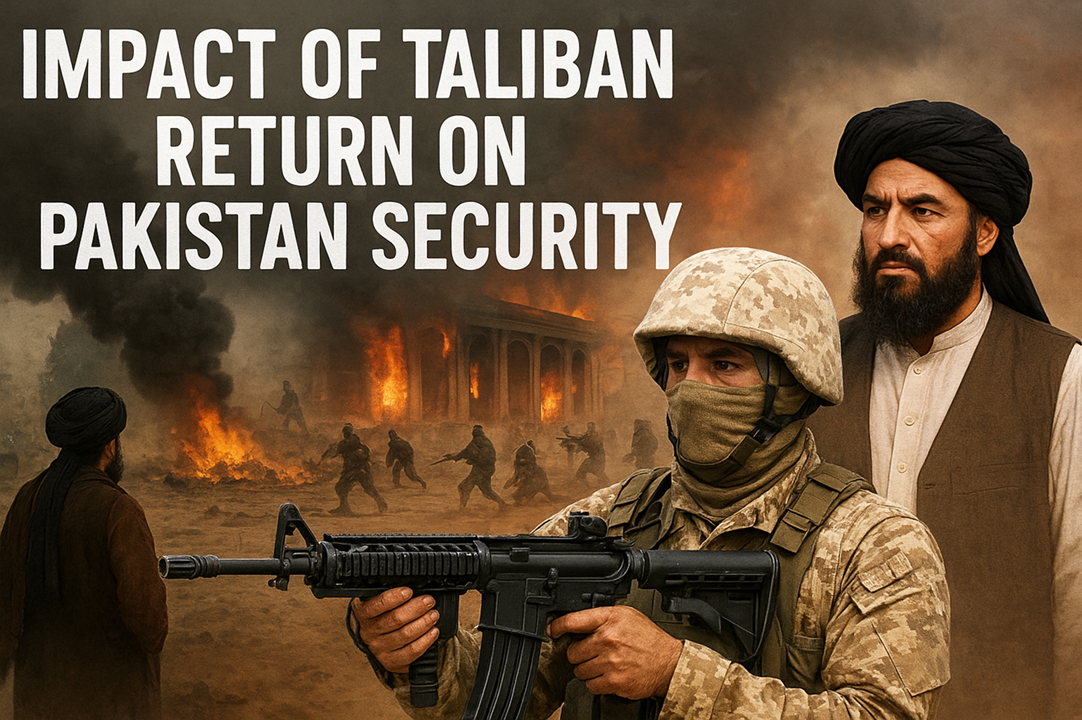
The impact of Taliban return on Pakistan has reverberated across multiple fronts—security, diplomacy, border management and domestic politics. Since the Taliban regained control in Afghanistan in August 2021, Islamabad has been forced to reassess longstanding strategies of dealing with growing insurgent threats, refugee flows, strained diplomatic relations and changing regional alignments.
Security Challenges Arising in Pakistan from Return of Taliban
Rise in Cross-Border Militancy and TTP Activity
One of the most direct consequences of the impact of Taliban return on Pakistan is the resurgence of militant activity, especially by the Tehrik-e-Taliban Pakistan (TTP). Pakistani authorities accuse the Afghan Taliban of providing logistical sanctuaries / tacit support for TTP operations, a claim that has been repeatedly denied by Kabul. (Arab News)
Violent incidents along the border have increased. Pakistani security forces report frequent cross-border skirmishes and infiltrations (Reuters), in some cases leading to deadly confrontations (Al-Jazeera).
Border Security and Policy Adjustments
In response to these threats, Islamabad has enhanced border security: erecting fencing, conducting frequent patrols and launching operations in former tribal regions. These practice changes are intended to counter the spillover of violence and arms trafficking (Asif et al., 2024)
Meanwhile, there have been controversial measures such as expulsion of undocumented Afghan refugees and tightening the terms for those holding Afghan identity documents in Pakistan (DAWN).
Policy & Diplomatic Shifts under the Impact of Taliban Return on Pakistan
Diplomacy, Recognition and Bilateral Relations
The impact of Taliban return on Pakistan has led Islamabad to recalibrate its diplomatic posture toward Kabul. Pakistan has moved to upgrade its diplomatic ties with Afghanistan, including plans to exchange ambassadors, which signals a thaw after years of tension (DAWN).
However, while diplomatic engagement increases, recognition of the Taliban regime remains sensitive, especially due to human rights concerns, the status of women and minorities and pressure from international partners (Maryam and Muhammad, 2023).
Domestic Policy Responses and Counterterrorism Strategy
Internally, Pakistan has adjusted its counterterrorism policy in light of the impact of Taliban return on Pakistan by adopting a more multi-pronged approach: combining military operations, intelligence sharing and collaborations with regional allies (Asif et al., 2024).
There is also a greater emphasis on controlling narratives, monitoring social media and preventing financing of militant groups. At the same time, socio-economic challenges—such as dealing with refugees, ensuring public safety in border regions and managing local grievances—have become policy priorities (Bukhari et al. 2024).
Wider Regional & Humanitarian Implications on Pakistan by the Return of Taliban
Refugees, Human Rights and Humanitarian Strain
The impact of Taliban return on Pakistan goes beyond security domain. It also has implications in humanitarian domains. Millions of Afghans remain in Pakistan, some as refugees, others undocumented, placing pressure on resources, services and social cohesion (DAWN).
Human rights concerns also complicate Pakistan’s policy stance. Reports of the Taliban’s restrictions on women’s rights, limited freedoms and governance issues have raised domestic and international criticism, which Pakistan must navigate carefully (Bukhari et al. 2024).
Geopolitics and Regional Balance
Strategic alliances and regional power dynamics are being reshaped. China remains a key partner for Pakistan, especially with the China-Pakistan Economic Corridor (CPEC) and broader regional connectivity ambitions (Bukhari et al. 2024).
Meanwhile, relationships with other international actors, such as the United States, neighboring India and Central Asian countries are affected by how Pakistan manages both its security concerns and diplomatic overtures toward the Taliban (Bukhari et al. 2024).
Conclusion
In sum, the impact of Taliban return on Pakistan has been multifaceted, exerting pressure on both security and policy domains. From the rise in TTP attacks and border skirmishes to diplomatic recalibrations and humanitarian strains, Pakistan finds itself navigating a complex environment. As Islamabad seeks to balance counterterrorism imperatives, regional cooperation and internal stability, its future strategy must be nuanced—one that addresses root causes of militancy, strengthens border governance and sustains diplomatic engagement without compromising human rights. Only then can Pakistan hope to manage effectively the ongoing repercussions of the Taliban’s return.
FAQs
Q 1. How has the Taliban’s return to power in Afghanistan affected Pakistan’s internal security?
A. The Taliban’s return in August 2021 emboldened militant groups like the Tehrik-e-Taliban Pakistan (TTP). Since then, Pakistan has faced a sharp rise in cross-border attacks, targeted killings, and infiltration attempts. The Afghan Taliban’s reluctance—or inability—to curb TTP activities has further strained Islamabad’s security apparatus, leading to intensified military operations and stricter border control measures.
Q2. Why are Pakistan–Afghanistan relations tense after the Taliban’s comeback?
A. Despite Pakistan’s early diplomatic support for the Taliban, relations have deteriorated. It is due to repeated border skirmishes, refugee disputes and accusations that Kabul shelters anti-Pakistan militants. Both governments have exchanged harsh statements, and major border crossings like Torkham and Chaman have faced periodic closures, disrupting trade and people’s movement.
Q3. What are the main policy changes Pakistan has made since the Taliban takeover?
A. Pakistan has recalibrated its policy toward Afghanistan by tightening border security, revising refugee management protocols, and re-evaluating its counterterrorism strategy. Islamabad has also adopted a more cautious diplomatic stance—maintaining working relations with the Taliban regime without extending formal recognition—while seeking cooperation from China, Iran, and Central Asian states on regional stability.
Q4. How does the impact of Taliban return on Pakistan influence regional stability?
A. The impact of Taliban return on Pakistan extends beyond bilateral tensions—it affects South and Central Asian stability. Increased militant movement across borders threatens regional trade and security. Pakistan’s alignment with China and its cautious engagement with Afghanistan could reshape the strategic landscape. It will influence future power dynamics among neighboring countries and global stakeholders.
Share Your Thoughts
Do you think Pakistan’s current strategy toward the Taliban is sustainable—or are we repeating old mistakes?
Share your thoughts below — your perspective can help drive a deeper national conversation.
